Revision Rhinoplasty Overview

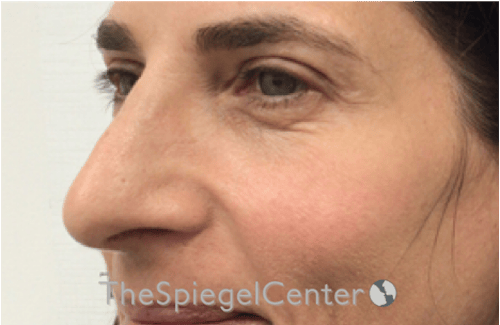
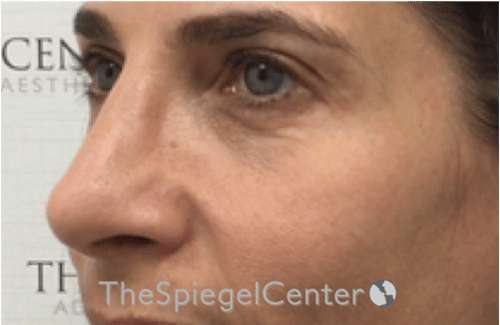
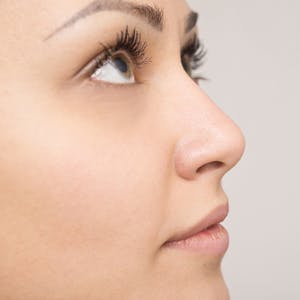
side profile of a woman with her hair tied in a bun

Revision Rhinoplasty At‑a‑Glance

  • Purpose: Correct cosmetic or breathing issues after one or more prior nose surgeries.
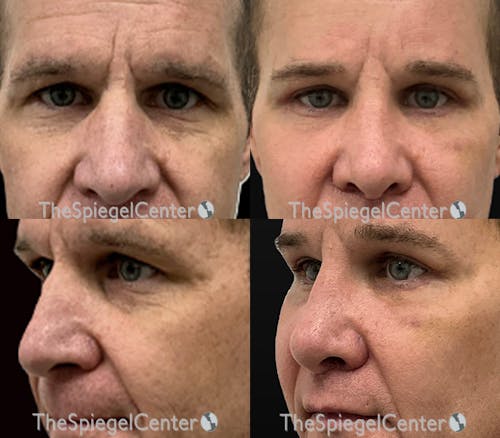
  • What we address: Crooked/asymmetric bridge, tip deformities, dorsal humps/depressions, pinched middle vault, over‑ or under‑resection, visible scars, valve collapse, and septal deviation.
  • Techniques: Open or closed approach; structural grafts (septal, ear, rib, or processed cartilage) to rebuild support.
  • Anesthesia: Individualized plan in our accredited surgical facility for comfort and safety.
  • Recovery: Back to desk work ~7–10 days (varies); swelling improves for months; final refinement ~12+ months.


What Is Revision Rhinoplasty?

Revision rhinoplasty is surgery performed after a previous nose operation to improve appearance, breathing, or both. Scar tissue, altered anatomy, and limited cartilage resources make revisions more complex than a first‑time procedure. 

Dr. Spiegel or Dr. Tower may reinforce the nose with cartilage grafts from the septum, ear (conchal), or rib; in select cases, processed donor cartilage may be appropriate. The goal is a nose that looks natural, fits your facial proportions, and functions reliably.

The highest quality experience in the world

Book your appointment today

Schedule a Consultation
Contact us media

What Can Revision Rhinoplasty Fix?

  • Crooked or asymmetric bridge/tip
  • Drooping or over‑projected tip
  • Bumps or depressions on the bridge
  • Pinched tip or middle vault collapse (internal/external valve)
  • Shortened, over‑resected, or upturned nose
  • Residual hump or under‑correction
  • Visible irregularities or scarring
  • Breathing impairment from septal deviation or valve collapse

Are You a Candidate for Revision Rhinoplasty?

You may be a candidate for revision rhinoplasty in Boston if you:

  • Are you unhappy with the results or have new breathing issues after prior rhinoplasty?
  • Are in good health and non‑smoking (or willing to pause nicotine).
  • Are realistic about goals and healing time.
  • Have allowed adequate healing since your last surgery (often 12 months).

Out‑of‑town patients are welcome; our team can help coordinate travel and follow‑ups.

Revision Rhinoplasty Recovery Timeline 

  • Days 1–3: rest, cool compresses, head elevation; mild congestion/pressure.
  • Days 5–7: splint and some sutures removed; return to non‑strenuous work often ~7–10 days.
  • Weeks 3–6: resume light exercise as cleared; swelling continues to decline.
  • Months 3–6: definition improves; small asymmetries settle.
  • 12+ months: final refinement—especially in the tip.

We provide a personalized after‑care plan, including taping, saline rinses, and scar‑care guidance when appropriate.

Background media

Revision Rhinoplasty Technique & Grafting

  • Open vs. closed exposure is chosen due to complexity and the need for precision.
  • Septal cartilage is preferred; otherwise, ear or rib cartilage provides robust support.
  • Processed/donor cartilage may be used in select cases.
  • Structural support with spreader, batten, or alar rim grafts helps maintain symmetry and airflow.
  • Soft‑tissue refinement to smooth irregularities and improve definition with a natural, non-operated look.

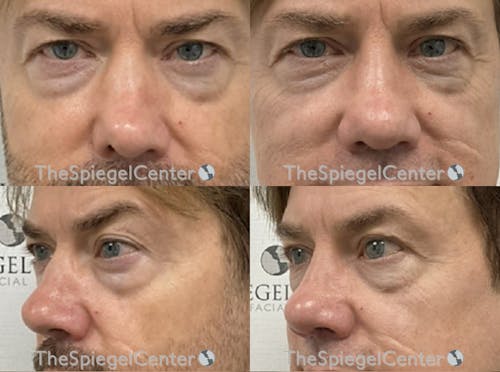
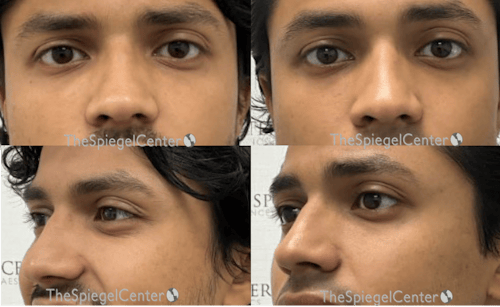
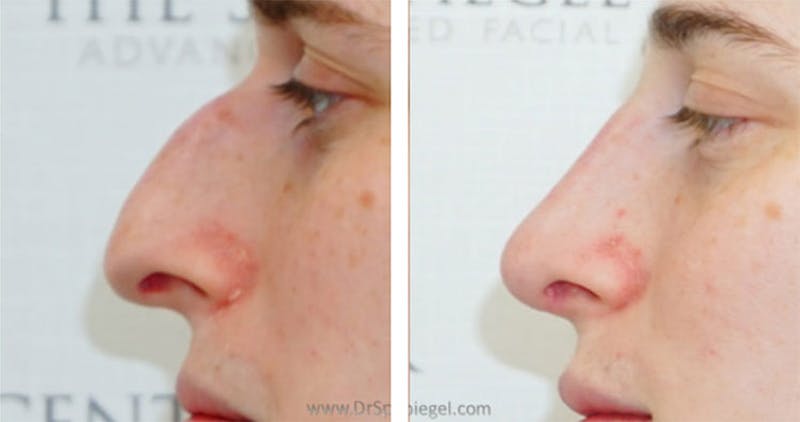
Before & After: Revision Rhinoplsty in Boston

View Gallery

What are the Risks Associated With Revision Rhinoplasty?

All surgery carries risks (bleeding, infection, poor wound healing, prolonged swelling, asymmetry, persistent obstruction, need for further revision). We minimize risk through meticulous planning, proven techniques, and close follow‑up after your revision rhinoplasty in Boston.

crystals
Doctor media

Why Choose The Spiegel Center for Revision Rhinoplasty in Boston?

  • High‑volume revision expertise: decades performing complex secondary and tertiary rhinoplasties.
  • Double board‑certified surgeons in facial plastic & reconstructive surgery.
  • Balanced goals: restore form and function—natural aesthetics with stable breathing.
  • Advanced grafting & reconstruction: spreader/batten/alar rim support as indicated to correct collapse or asymmetry.
  • Planning you can see: photographic analysis and digital visualization to set realistic, shared goals.
  • Comprehensive follow‑through: detailed recovery plan, scar‑care guidance, and structured check‑ins.

Financing Options Available at The Spiegel Center

  • PatientFi: Check rates without impacting your credit score, low‑interest plan options, and a fast online application.
  • CareCredit: Present your CareCredit card in person. Choose convenient monthly plans (including 0% promotional options for qualified applicants). Apply before your visit or call 617‑414‑5058 for help.

/resources/financing/For more information, please visit our Financing page.

Banner media

Revision Rhinoplasty FAQs

Is Revision Rhinoplasty More Expensive Than a First-Time Rhinoplasty?

Revision rhinoplasty is often more costly than an initial procedure, since it typically requires more complex planning, additional cartilage grafting, and more operating time due to scar tissue and altered anatomy.

Can Revision Rhinoplasty Be Performed if a Different Surgeon Did My First Surgery?

Yes. Many revision rhinoplasty patients come from other practices, and The Spiegel Center's surgeons regularly evaluate prior surgical records and imaging to plan a safe, effective correction.

Will I Need a Second Revision if the First One Doesn't Fully Correct the Problem?

While the goal is to achieve lasting results in a single revision, a small percentage of complex cases may require an additional procedure for further refinement, which is discussed as part of realistic expectation-setting.

What Imaging or Records Should I Bring to a Revision Rhinoplasty Consultation?

Bringing any available photos, surgical notes, or imaging from the original rhinoplasty helps the surgical team understand what was previously done and plan the most appropriate correction.

How Does Scar Tissue From the First Surgery Affect the Revision Procedure?

Scar tissue can make the nasal tissues stiffer and less pliable, which requires more careful, precise dissection during revision surgery to safely access and reshape the underlying structures.

Can Revision Rhinoplasty Fix Breathing Problems That Started After the First Surgery?

Yes. Structural issues, such as internal or external valve collapse that develops after initial surgery, are a common reason patients seek revision, and these can often be corrected with grafting techniques.

Is Ear or Rib Cartilage Painful to Harvest for a Revision Rhinoplasty Graft?

Both donor sites involve some discomfort at the harvesting location in addition to the nasal surgery. However, this is generally well managed with local anesthesia and standard pain control during recovery.

How Many Consultations Are Typically Needed Before Scheduling a Revision Rhinoplasty?

Because of the added complexity, more than one consultation is often recommended to thoroughly review prior surgical history, imaging, and a customized surgical plan before setting a surgery date.

Can Revision Rhinoplasty Correct a Pinched Nasal Tip From a Prior Surgery?

Yes. A pinched or overly narrow tip, a common complication of certain initial rhinoplasty techniques, can often be widened and reshaped with cartilage grafts during revision surgery.

References:

  • Hwang, H. S., & Spiegel, J. H. (2014). The effect of “single” vs “double” eyelids on the perceived attractiveness of Chinese women. Aesthetic Surgery Journal, 34(3), 374–382.
    https://academic.oup.com/asj/article-abstract/34/3/374/220642 403
  • Spiegel, J. H., & Polat, J. K. (2007). Microvascular flap reconstruction by otolaryngologists: prevalence, postoperative care, and monitoring techniques. Laryngoscope, 117(3), 485–490.
    https://onlinelibrary.wiley.com/doi/abs/10.1097/MLG.0b013e31802d6e66 403
  • Spiegel, J. H., & Rodriguez, G. (2008). Chondrolaryngoplasty under general anesthesia using a flexible fiberoptic laryngoscope and laryngeal mask airway. Archives of Otolaryngology–Head & Neck Surgery, 134(7), 704–708.
    https://jamanetwork.com/journals/jamaotolaryngology/fullarticle/408787
  • Spiegel, J. H. (2019). The modified bullhorn approach for the lip-lift. JAMA Facial Plastic Surgery, 21(1), 69–70.
    https://www.liebertpub.com/abs/doi/10.1001/jamafacial.2018.0847
Contact us media
Accessibility: If you are vision-impaired or have some other impairment covered by the Americans with Disabilities Act or a similar law, and you wish to discuss potential accommodations related to using this website, please contact our Accessibility Manager at 617-566-3223.
Contact Us